

Get your science and technology news from Greece
Provided by AGP
Teaching in the age of AI: ‘Humans are what matter’
On 6 February 2011, Professor Konstantinos Papadikis uprooted his life and bought a one-way ticket from London to Shanghai, just a day after his birthday party.
He was one of the earliest lecturers at XJTLU’s Department of Civil Engineering.
Fifteen years later, a new era demanded the same grit from him. Now the Associate Vice President for Education, Professor Papadikis is focused on a question with far greater consequences: What does it take to prepare the next generation of students for a post-AI world?
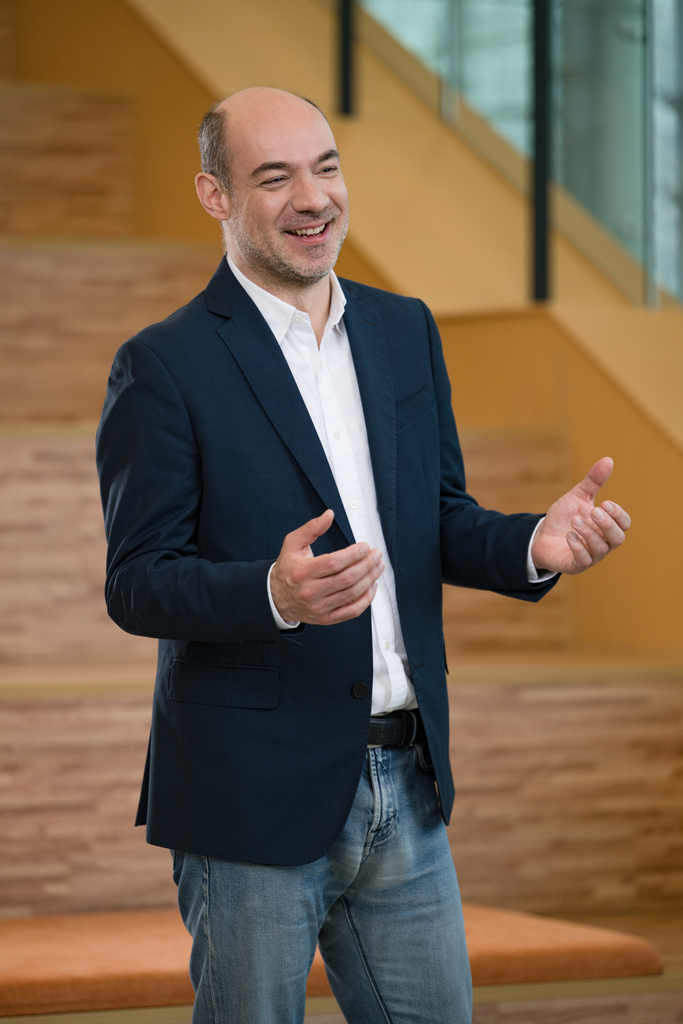
Professor Konstantinos Papadikis on campus
From Greece to the UK and China
Professor Papadikis grew up fascinated by how things worked. He still remembers the drive home from the airport in Greece after dropping his mother off for a flight to Italy, when he turned to his father and asked: “How can airplanes fly?”
From then on, the movement of fluids and the raw sound of an engine at full thrust became the interests he grew into, pushing him to pursue a bachelor’s degree in Mechanical Engineering at Aston University and later a master’s in Mechanical Engineering at the University of Warwick, both in the UK.
After completing his Postdoctoral Research Associate position at the University of Southampton, UK, he decided to join XJTLU as a full-time lecturer and researcher. The University was merely 5 years old at the time.
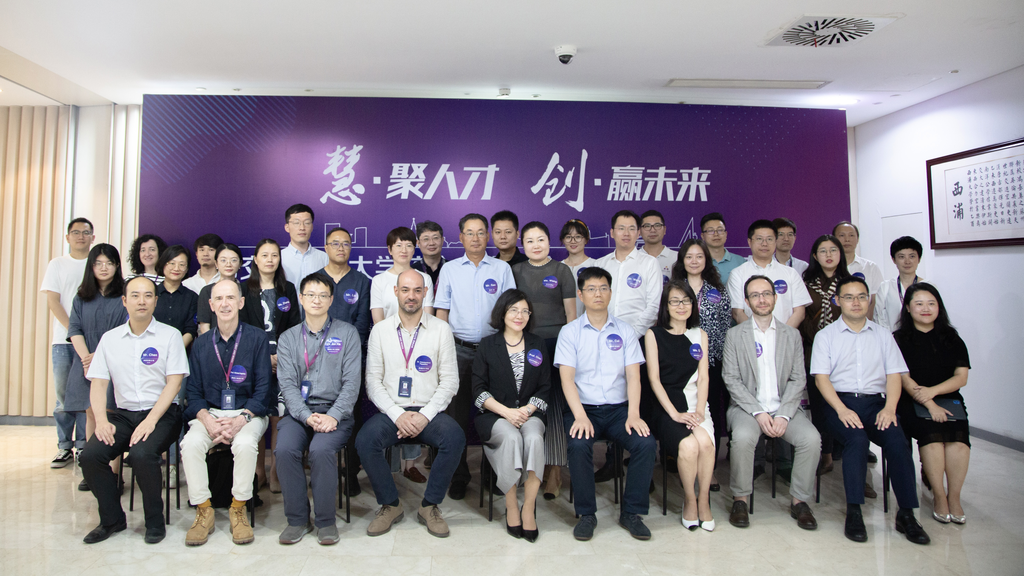
Professor Papadikis (first row, fourth from the left) attending the 2021 XJTLU Enterprise Cooperation Conference
A decade worth of growth
Professor Papadikis witnessed first-hand the speed of XJTLU’s progress. “From one building at the time to a multi-campus university,” he said.
He remarked that someone who was there in both 2016 and 2026 would witness how “the expansion and growth have been rapid and unprecedented”, from the physical infrastructure to the support given to students and staff, as well as the education facilities.
The scale of that change is visible to anyone who walks around XJTLU’s campuses. What is less visible, and what Professor Papadikis considers more important, is what has stayed the same.
Professor Papadikis is referring to XJTLU's student-centred and research-led philosophy, which has remained unchanged for 20 years, though its physical manifestation continuously adapts to societal, industry, and technological shifts.
He elaborated on the meanings of these two terms in the context of teaching. The goal is to have students who can “adapt the teaching, knowledge, and content” from different fields and synthesise this information in relation to their own expertise and technical knowledge. “I think this is what XJTLU is, and that’s why it’s considered to be quite a progressive university,” he added.
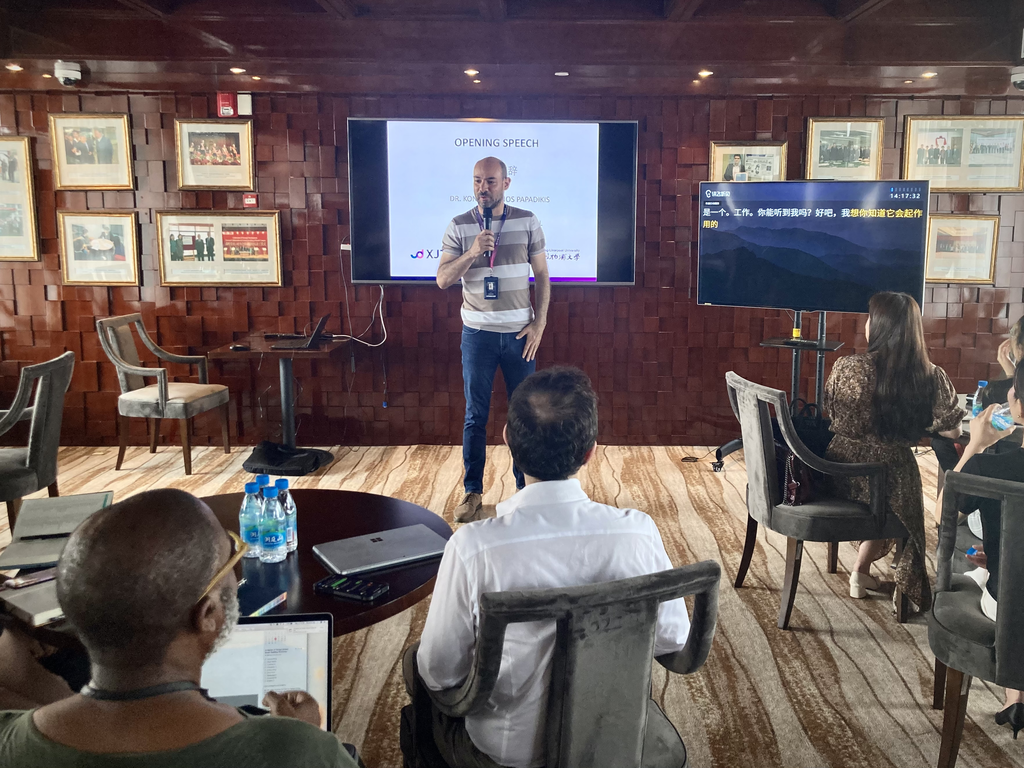
Professor Papadikis speaking at the Green Building workshop
For Professor Papadikis, the student at the centre of that effort is one who carries no sense of being out of place anywhere in the world. “For me, that’s a global citizen, someone who moves around the world and feels like home at all times,” he said.
With the rise of AI, that vision is now being stress-tested.
The case for human thinking in a post-AI classroom
Human interaction inside the classroom needs a transformation; this much is clear to Professor Papadikis. “In the era of AI, access to information has become extremely easy,” he said. “So, the bigger question is how we enhance the human factor in this process.”
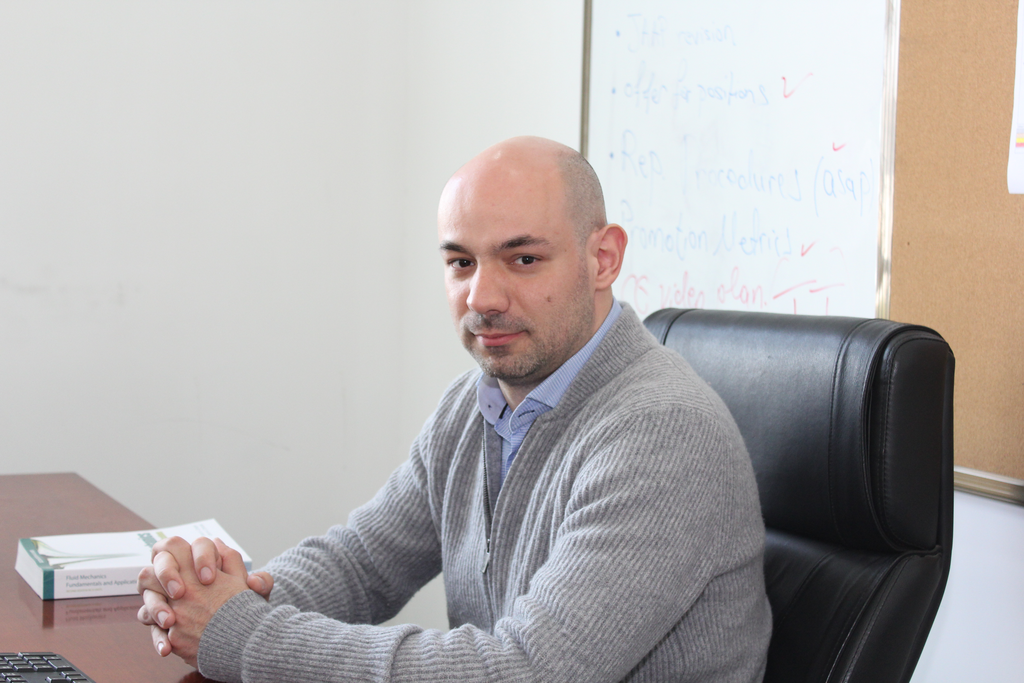
Professor Papadikis in his office
Professor Papadikis does not want students to be merely disconnected, passive users of AI. “When you are a passive user of a technology, eventually you will be replaced, because your thinking becomes minimal,” he said, giving an example of how, when asked to write an essay, a student might simply go to an AI software and ask it to generate an essay in a couple of minutes. For him, this method lacks filtering, critical thinking, and ethical considerations.
This raises the question of how students are evaluated in the classroom. “We need to start thinking from first principles, so we are focusing on the process rather than solely evaluating the output,” he said.
One key question Professor Papadikis is constantly trying to solve is: How do we train our students to be critical thinkers about the technology available to them? “Not to take information for granted, but to question it, to adapt it, to be able to handle it for refinement and to have a reflective mindset,” he elaborated, emphasising “reflection” as the keyword.
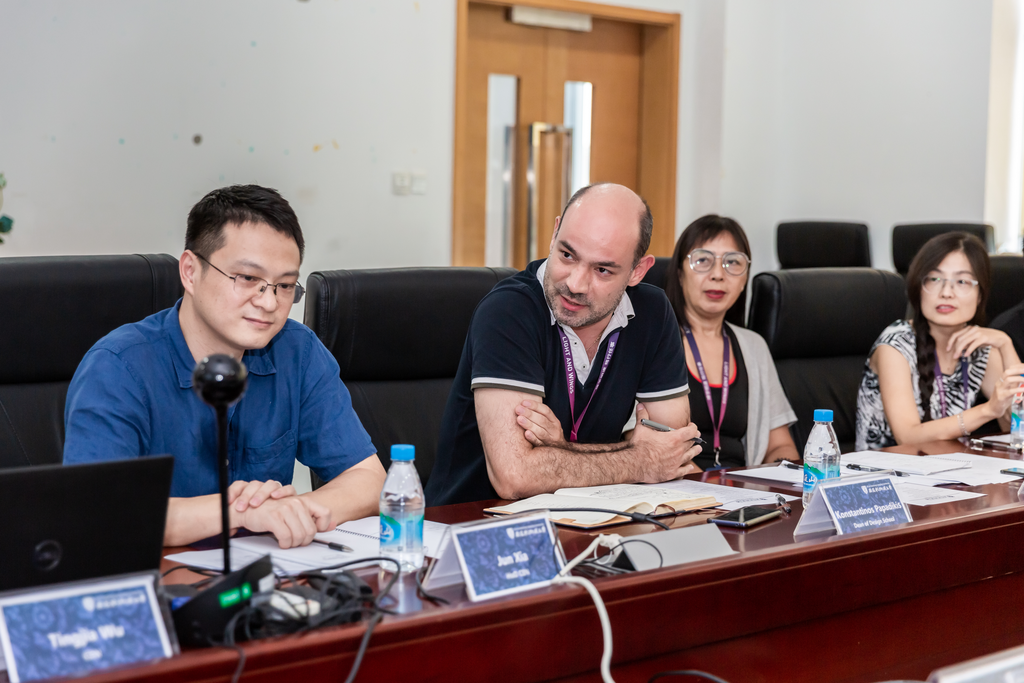
Professor Papadikis attending the Industrial Advisory Board meeting
As the Associate Vice President for Education, his primary focus for the next five years is to rethink the design of XJTLU’s programmes. He aims to design a curriculum that will be able to “take our graduates to the post-AI era”.
Amidst the uncertainty of the rapidly changing technological landscape, Professor Papadikis believes it is even more imperative for students to “understand what makes us different from the machines”.
Advice for XJTLU students: Be resilient
To XJTLU students navigating one of the most turbulent periods in recent memory, Professor Papadikis offers a characteristically direct message. “They have to be open-minded, adaptable, and resilient.” When encountering low moments in life, he wants them to remember that “failure comprised the learning process that allows for reflection and analysis, and it shouldn’t be a prohibitive factor for them,” he said.
Failure, he added, is “a part of life and a part of what makes us human”.
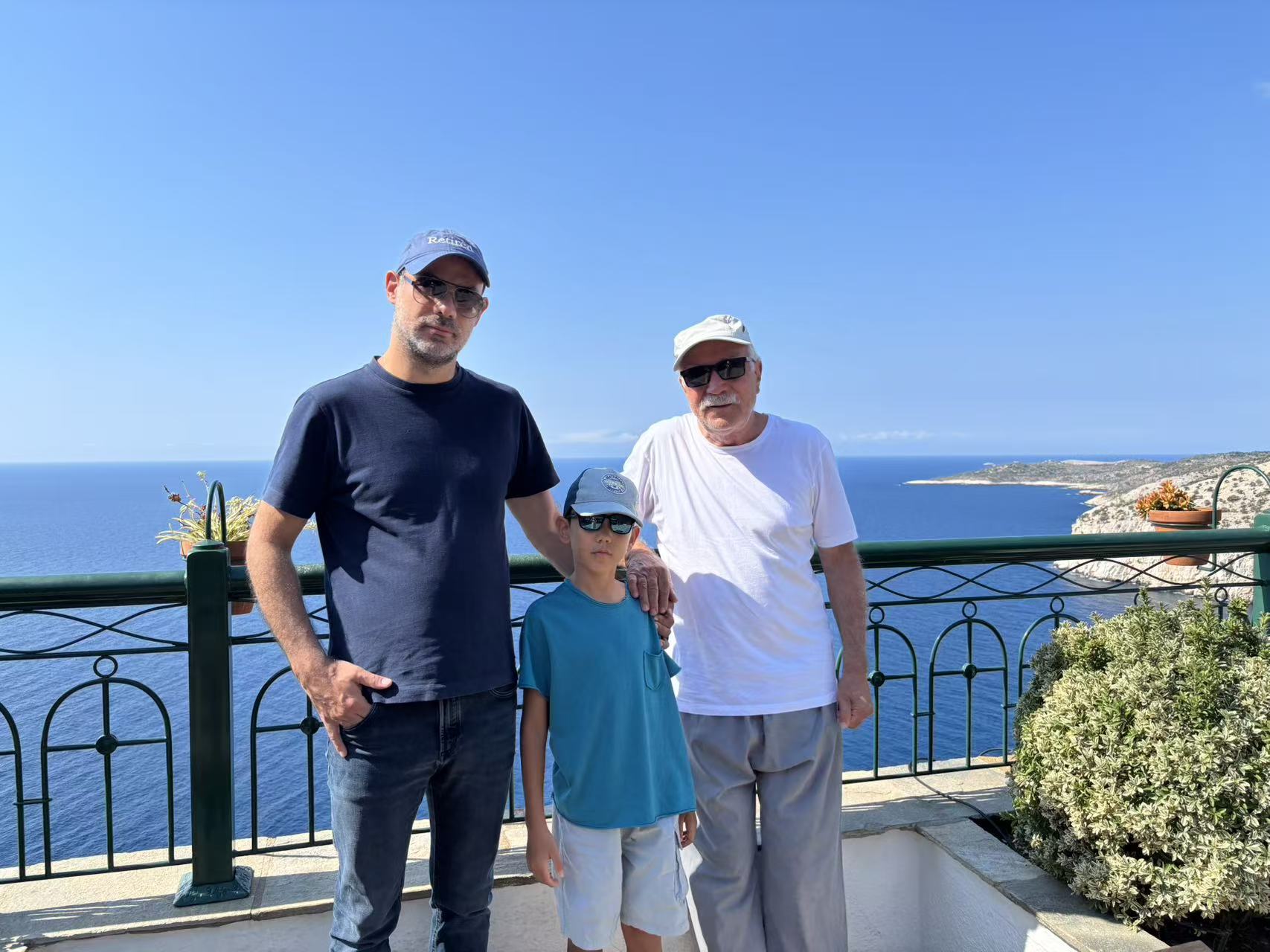
Professor Papadikis spending time with his son and father in Greece
When asked what makes him stay at XJTLU, Professor Papadikis laughed. “Never a dull moment at XJTLU.” Established universities, he reflected, tend to calcify over time, their structures too settled to bend easily toward new ideas. XJTLU, still young and growing, has the luxury of change. For someone like Professor Papadikis, who finds genuine relaxation in a classroom, who reads science fiction, plays guitar, swims, and has just recently published research on clean water and sanitation, standing still was never really an option.
His journey at XJTLU began over a decade ago. By all appearances, it is nowhere near finished.
By Vionna Fiducia Theja
Edited by Xinmin Han
Photos courtesy of Professor Konstantinos Papadikis
Legal Disclaimer:
EIN Presswire provides this news content "as is" without warranty of any kind. We do not accept any responsibility or liability for the accuracy, content, images, videos, licenses, completeness, legality, or reliability of the information contained in this article. If you have any complaints or copyright issues related to this article, kindly contact the author above.
